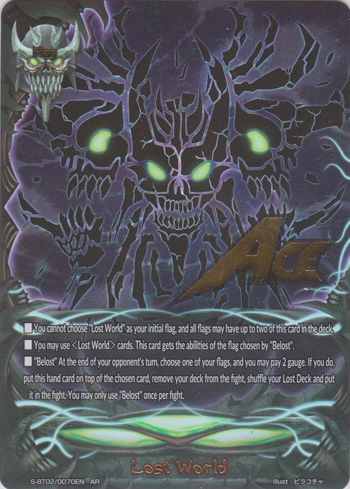
 Hey hey. I'm back and frankly about the same as ever. I'm here to talk to you about Lost World. This is... A thing. I have to talk about it at some point seeing as the flag itself is splashable in just about any deck and honestly necessary in a few I might write about eventually. The only problem is that most Lost World cards are either gimmicky or $10+ apiece. However, I'm here to tell you that possible and even easy to make a budget Lost Deck with just a few C, U, and R cards along with a copy of S-SS-01. I'll take you through it now. Think of this as a combination product review and budget deck guide, as I'll be covering the special set and upgrade paths in this article. If you need a link to the special set's decklist in order to follow along, here's a Buddyspoiler link. Let's ride.
Tuesday, January 22, 2019
Budget Deck/Product Review: Lost World/Lost Dimension
Hey hey. I'm back and frankly about the same as ever. I'm here to talk to you about Lost World. This is... A thing. I have to talk about it at some point seeing as the flag itself is splashable in just about any deck and honestly necessary in a few I might write about eventually. The only problem is that most Lost World cards are either gimmicky or $10+ apiece. However, I'm here to tell you that possible and even easy to make a budget Lost Deck with just a few C, U, and R cards along with a copy of S-SS-01. I'll take you through it now. Think of this as a combination product review and budget deck guide, as I'll be covering the special set and upgrade paths in this article. If you need a link to the special set's decklist in order to follow along, here's a Buddyspoiler link. Let's ride.
Monday, January 7, 2019
Budget Deck: Shadow Shades (Magic World)
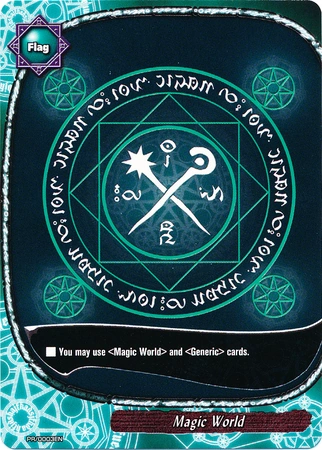
Hey hey. It's your favorite writer back at it again with some budget stuff. Shadow Shades are a deck. They are quite the deck. Back in the DDD era of Buddyfight, they were a decent force, although it looks as though 72 Pillars generally saw more success (not pictured, me searching "Buddyfight Shadow Shade Cardlist" to find official tops for the deck). After that era, though, they saw absolutely no relevance over the course of X from what I'm aware.
Buddy Legends, one of the first Booster Set Alternatives of the Ace era, however, changed all of that. Shadow Shades went from a pretty boring big dude do a sit deck to being able to toolbox any card from the drop zone and refuel the soul of your center guy turn after turn through a grand total of... Four cards. Wow. Let's pause for a second, though. These four cards made the deck tier one. That means one of two things: 1) Shadow Shades were on the verge of playability for years and this is what pushed them over the edge or 2) These four cards that were just released carry the deck on their own, making it easily accessible. I'm writing about the deck, so no prize for guessing which one it is.
Friday, December 28, 2018
Product Review: S-SS02 (3 Garga Decks! Impact! Triple Punisher)

Tuesday, December 25, 2018
Concepts: Sideboarding
The Sideboard is an optional deck consisting of between 0 to 10 cards separate from the player's main deck to be used in a tournament. Between games 1-2 and 2-3 of each round, players may choose cards from their sideboard and swap them with some cards in their main deck. They must return the changed cards to their correct decks, i.e. to the way the deck originally was, before each new round.
The sideboard is referred to as optional, but allow me to let you in on a little secret. You ready?
For success beyond casual play (best of 3 tournament play), it's not optional. Consider this: You play 2 to 3 games per round. Each round, every game after the first is played post-board. In other words, you play two thirds of your competitive games post-siding. Use this to your advantage. I'm sure that makes enough sense, but let's talk about how to make and use a good side.
Tuesday, December 11, 2018
"Budget" Deck: Executioners
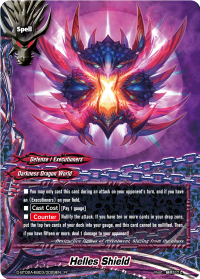 Man, I love Executioners. It's rare in card games that you'll find a deck that allows you to break all the standard rules of deck building to kill your opponent, but there's almost always a trip. In Cardfight!! Vanguard, that was Daikaiser. Yu-Gi-Oh! has Sekka's Light variants, Grass builds, and any number of other things. Magic probably has something, I guess, but I've just now gotten into MtG. Buddyfight, though? It's almost definitely Executioners. This is going to be a long post that I'll divide into a few sections, but let me explain what this deck is before I gush much more.
Executioners are a mid-range deck that, if you can find the pieces, will never completely fall out of relevance. The initial core will typically take around $100 or $150, depending on the price of the Gate and Helles Shield. This investment won't let you down, though, as Executioners are designed around flexibility and adapting to situations. The deck almost always breaks the 50-card norm in favor of tech space and deck-out avoidance. This means that, within reason, you don't have to struggle to fit in any particular cards.
Sunday, June 24, 2018
Concepts: Investments
 |
| Not this time, sadly |
In today's post, I'm going to go through the checklist I try to follow when deciding whether I want to buy a new deck or not. Throughout, I'll try to keep Ozons as an example, since that's the only thing you actually know that I own.
Wednesday, May 2, 2018
Concepts: Searchers and Upstart Theory
Hey hey. If you're here, I'll assume you've read at least some of the past articles, such as the Ozon deck profile. If you did, you might remember me saying, "Run 4 of your searchers. While I could delve into this in an article somewhere else," during the Ozon-A paragraph. Well, this is that article. While math is normally Chang's strong suit and I haven't even taken middle school probability (my sixth grade math teacher skipped that unit), I think I probably know how to work a hypergeometric calculator thanks to YouTube and I can probably figure out that a smaller denominator means better odds. I'll start with Upstart Theory and move on to searchers. Good? Good. Let's ride.
Subscribe to:
Comments (Atom)